
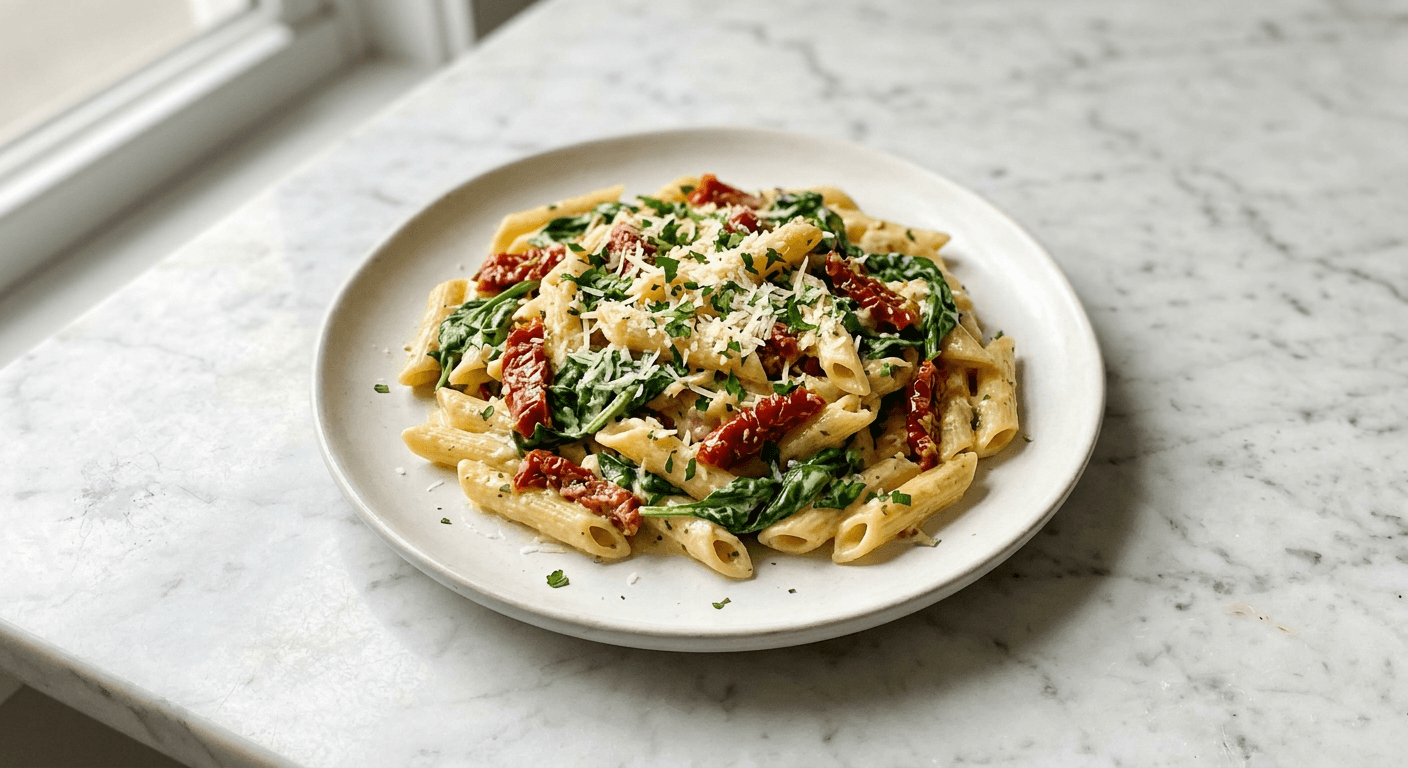
Prep: 15 minutes | Cook: 30 minutes | Total: 45 minutes | Serves: 4 | Difficulty: Easy
Why you will love this recipe: This pasta comes together in under an hour with ingredients you probably already have. The sauce is silky and restaurant quality without any fancy techniques. Every bite delivers bold garlic flavor balanced by creamy richness and a touch of acidity from sun-dried tomatoes.
This Italian dinner recipe has become my go-to whenever I need something impressive but don’t have hours to spend in the kitchen. I first tasted a version of this dish during a trip to a small restaurant in Florence, where the chef tossed steaming pasta with what seemed like the simplest ingredients but created something absolutely unforgettable. The magic is in how the flavors build on each other, the garlic mellowing in the cream, the tomatoes adding little bursts of concentrated sweetness, and the spinach bringing freshness.
What makes this Creamy Tuscan Garlic Pasta special is how it captures the essence of Tuscan cooking without requiring any special skills. You don’t need to make pasta from scratch or track down obscure ingredients. The sauce comes together in one pan while your pasta cooks, and within minutes of draining, you’ll have a dinner that looks and tastes like you spent all day preparing it. The garlic becomes sweet and fragrant rather than harsh, and the Parmesan cheese melts into the cream to create that luscious coating every strand of pasta deserves.
I’ve made this dish dozens of times now, and it never fails to impress. Friends always ask for the recipe, convinced there must be some secret technique. But honestly, it’s just good ingredients treated with respect and combined in the right order. The key is using real cream, not milk, and taking the time to let the garlic cook properly without burning. Those two things alone will transform your Italian dinner recipe from ordinary to extraordinary.
Key Facts About Creamy Tuscan Garlic Pasta
- Tuscan cuisine is known for its simplicity and use of fresh, high-quality ingredients, which is why this recipe requires just eight main components.
- Sun-dried tomatoes are a staple in many Italian dishes, adding a burst of concentrated flavor that fresh tomatoes cannot replicate.
- Pasta is a central component of Italian meals, often enjoyed as a first course or primo, and in Italy, dinner portions typically range from 80 to 100 grams of dry pasta per person.
- The sauce-to-pasta ratio in this recipe is designed to coat every strand without pooling at the bottom of the bowl, using approximately 1.5 cups of sauce per pound of pasta.
- Garlic contains allicin, which develops its characteristic flavor when crushed or chopped, and cooking it gently in butter or oil for 2 to 3 minutes brings out its natural sweetness.
Ingredients for This Italian Dinner Recipe
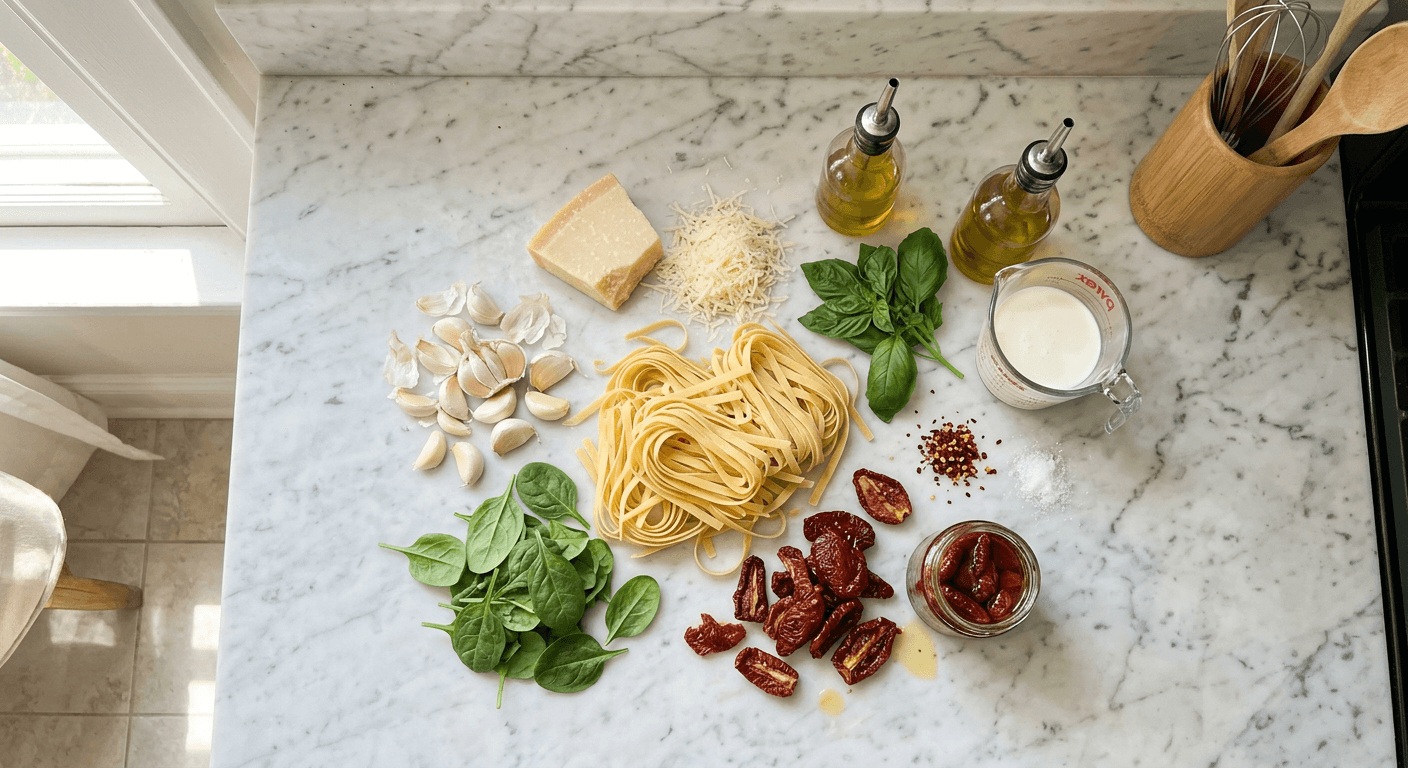
For the Pasta:
- 1 pound penne pasta, or your favorite short pasta shape
- 1 tablespoon salt for the pasta water
- 1 cup reserved pasta cooking water
For the Creamy Tuscan Sauce:
- 2 tablespoons butter, unsalted preferred
- 6 cloves garlic, minced or finely chopped
- 1/2 cup sun-dried tomatoes, oil-packed and drained, then chopped
- 2 cups heavy cream, full-fat for best texture
- 1 cup freshly grated Parmesan cheese, plus more for serving
- 3 cups fresh spinach, packed measurement
- 1 teaspoon Italian seasoning, or a mix of dried basil and oregano
- 1/2 teaspoon red pepper flakes, optional for gentle heat
- Salt and black pepper to taste
How to Make Italian Dinner Recipe Step by Step
Step 1: Cook the Pasta
Bring a large pot of water to a rolling boil over high heat, then add 1 tablespoon of salt. The water should taste like the sea. Add the penne pasta and cook according to package directions until al dente, usually about 10 to 12 minutes. The pasta should have a slight firmness when you bite into it because it will continue cooking slightly when you toss it with the hot sauce. Before draining, use a measuring cup to scoop out about 1 cup of pasta water. This starchy liquid is your secret weapon for adjusting the sauce consistency later. Drain the pasta but don’t rinse it, as the residual starch helps the sauce cling better.
Step 2: Start the Garlic Base
While the pasta cooks, heat a large skillet over medium heat and add the 2 tablespoons of butter. Let it melt completely and start to foam slightly, then add the minced garlic. This is where patience pays off. Cook the garlic gently, stirring constantly with a wooden spoon, for about 2 to 3 minutes until it becomes fragrant and just barely starts to turn golden. You want to coax out the sweet, mellow flavor without letting it brown too much, which would make it bitter. The butter should sizzle gently around the garlic, and your kitchen will smell absolutely incredible.
Step 3: Add Sun-Dried Tomatoes and Cream
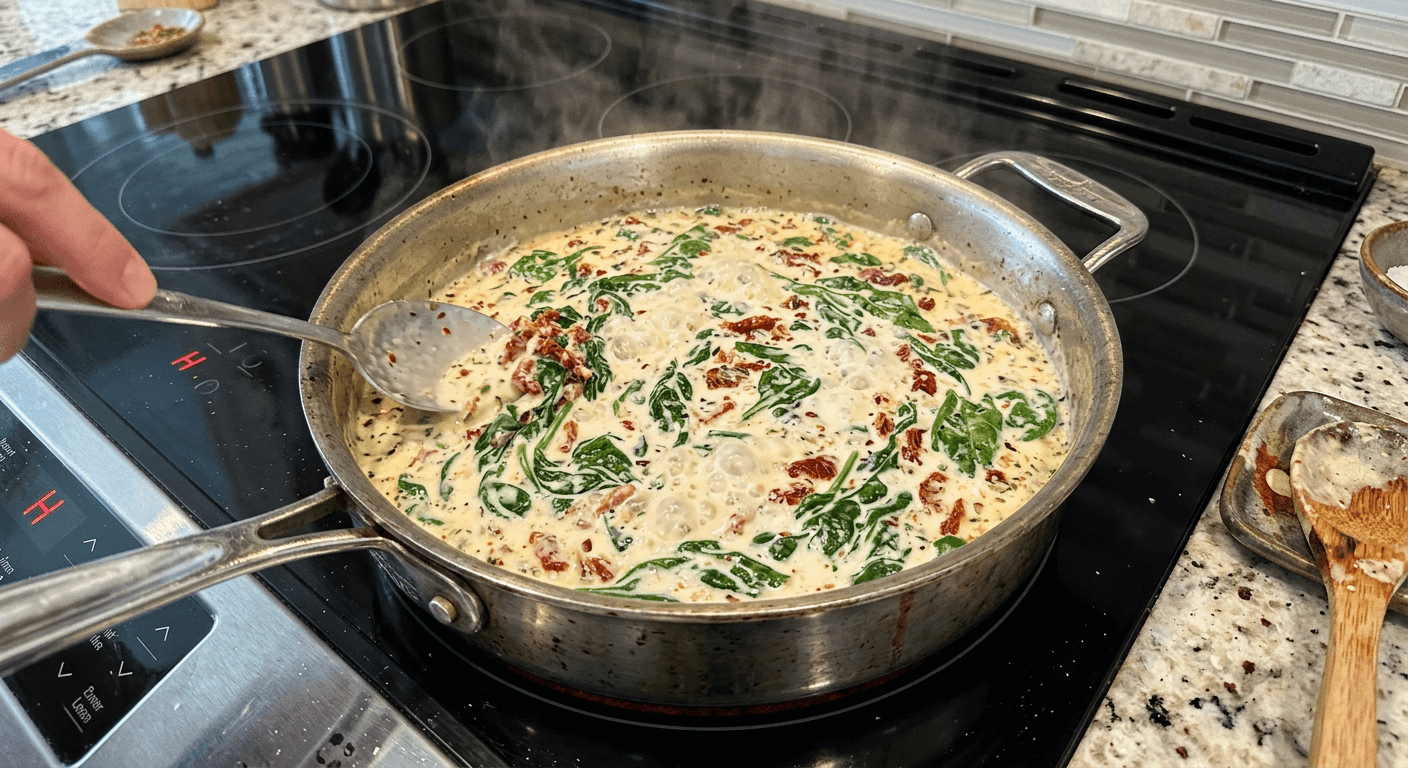
Add the chopped sun-dried tomatoes to the garlic butter and stir for about 1 minute. This gives them time to release some of their concentrated flavor into the butter. Pour in the 2 cups of heavy cream and stir everything together. Add the Italian seasoning and red pepper flakes if you’re using them. Bring the mixture to a gentle simmer, then reduce the heat to medium-low. Let it bubble very softly for about 5 to 7 minutes, stirring occasionally. The cream will thicken slightly and reduce by about a quarter. You’ll know it’s ready when you can draw a line through the sauce on the back of a spoon and it holds for a second before flowing back together.
Step 4: Incorporate Parmesan and Spinach
Reduce the heat to low and add the grated Parmesan cheese to the cream sauce. Stir constantly as the cheese melts into the sauce, creating a smooth, cohesive mixture. This should take about 2 minutes. Once the cheese is fully incorporated and the sauce looks glossy, add the fresh spinach by the handful. It will seem like a lot at first, but it wilts down dramatically. Stir gently and the spinach will wilt within 2 to 3 minutes, shrinking to about a third of its original volume. The sauce should now be a beautiful pale color flecked with green spinach and red tomato pieces.
Step 5: Combine Pasta and Sauce
Add the drained pasta directly to the skillet with the sauce. Using tongs or two large spoons, toss everything together gently but thoroughly. The goal is to coat every piece of pasta with the creamy sauce. If the sauce seems too thick or the pasta isn’t mixing easily, add the reserved pasta water a few tablespoons at a time, stirring between additions. The starch in that water will help the sauce become silky and help it adhere to the pasta. You might not need all of it, or you might need a bit more than you reserved. Taste and add salt and black pepper as needed. Remember that Parmesan is already salty, so you might need less salt than you think.
Tips for the Best Italian Dinner Recipe
Use Freshly Grated Parmesan
This tip appears in almost every Italian recipe I share, and that’s because it really matters. Pre-grated Parmesan from a container contains anti-caking agents that prevent it from melting smoothly into sauces. When you grate a block of Parmesan yourself, you get pure cheese that melts into a silky, cohesive sauce without any graininess. Plus, the flavor is noticeably better, with more depth and nuttiness. I buy a wedge of Parmigiano-Reggiano and keep it wrapped in parchment paper in my cheese drawer. It lasts for weeks and makes such a difference in dishes like this.
Don’t Skip the Pasta Water
I mentioned this earlier, but it bears repeating because it’s genuinely one of the most important techniques in pasta cooking. That cloudy, starchy water you reserve before draining isn’t just hot water. It’s loaded with starch from the pasta, and when you add it to your sauce, it acts as a binder and emulsifier. It helps the fat in the cream and cheese combine with the water-based elements, creating a smooth sauce that clings to the pasta instead of sliding off. Professional Italian chefs always use pasta water, and once you get in the habit, you’ll wonder how you ever made pasta without it.
Control Your Garlic Temperature
Garlic is wonderful when it’s golden and fragrant, but it turns bitter and acrid the moment it burns. The difference between perfect and ruined garlic is often just 30 seconds. When you add minced garlic to butter or oil, keep the heat at medium or even medium-low, and never walk away from the stove. Stir it constantly and watch for that moment when it just starts to turn the palest gold. That’s when you add the next ingredient to stop the cooking. If you do accidentally burn the garlic, don’t try to salvage it. Throw it out, wipe the pan clean, and start over. I know it seems wasteful, but burnt garlic will ruin the entire dish.
Adjust Thickness with Confidence
Sauce consistency is a matter of personal preference, and you should feel empowered to adjust it to exactly how you like it. Some people love a thick, coating sauce that’s almost like a cheese sauce. Others prefer something lighter that pools just slightly at the bottom of the bowl. Both are correct. The reserved pasta water gives you complete control. Add it gradually, stirring and observing how the sauce changes. It will thin at first, then as you stir, the starch will help everything come together in a glossy, unified sauce. You can always add more water, but you can’t take it away, so add conservatively at first.
Variations and Substitutions
Protein-Packed Tuscan Pasta
The vegetarian version is wonderful, but adding grilled chicken or sautéed shrimp transforms this into an even heartier meal. For chicken, I season boneless, skinless chicken breasts with salt, pepper, and a bit of Italian seasoning, then grill or pan-sear them until they reach an internal temperature of 165°F. Let the chicken rest for 5 minutes, then slice it against the grain and arrange it on top of the pasta or toss it in. For shrimp, use about 1 pound of large shrimp, peeled and deveined. Sauté them in a separate pan with a bit of butter and garlic for about 2 minutes per side until pink and opaque, then fold them into the finished pasta. Both proteins work beautifully with the creamy garlic sauce.
Lighter Whole Wheat Version
If you want to make this dish a bit healthier without sacrificing too much of the comfort factor, switch to whole wheat pasta or a blend of regular and whole wheat. Whole wheat pasta has more fiber and a nuttier flavor that actually complements the sun-dried tomatoes nicely. You can also use half-and-half instead of heavy cream, though the sauce will be thinner and less rich. To compensate, you might want to add an extra quarter cup of Parmesan to give it more body. Another option is to increase the amount of spinach to 4 or even 5 cups, which adds volume and nutrition without adding many calories.
Vegan Tuscan Pasta
You can absolutely make a vegan version of this recipe that’s still incredibly creamy and satisfying. Replace the butter with olive oil or vegan butter. Instead of heavy cream, use full-fat coconut cream or a cashew cream made by blending soaked cashews with water until silky smooth. For the Parmesan, there are several good vegan Parmesan alternatives available now, or you can make a simple version by blending cashews with nutritional yeast, garlic powder, and salt. The sun-dried tomatoes, garlic, and spinach remain the same. The flavor will be different but still delicious, with the garlic and tomatoes providing plenty of depth.
What to Serve With Creamy Tuscan Garlic Pasta
This pasta is rich and satisfying, so I like to serve it with something crisp and fresh to balance all that creaminess. A simple green salad with mixed lettuces, cucumber, and cherry tomatoes dressed in a bright lemon vinaigrette cuts through the richness beautifully. The acidity of the lemon dressing cleanses your palate between bites of creamy pasta. I sometimes add shaved fennel or red onion to the salad for extra crunch and a bit of sharpness. The key is keeping the salad simple and letting the dressing be quite tangy.
Garlic bread is an obvious pairing, and I’ll admit it makes the meal feel quite indulgent since you’re essentially doubling down on carbs and garlic. But sometimes that’s exactly what you want. I make mine by splitting a baguette lengthwise, spreading it with softened butter mixed with minced garlic, parsley, and a pinch of salt, then broiling it until golden and crispy. The crunch of the bread contrasts nicely with the soft pasta, and it’s perfect for soaking up any extra sauce left in your bowl.
For a more elegant presentation, especially if you’re serving this for guests, roasted vegetables make a beautiful side dish. I particularly love roasted asparagus or broccolini, which you can prepare while the pasta cooks. Toss the vegetables with olive oil, salt, and pepper, then roast at 425°F for about 15 to 20 minutes until tender and slightly charred. The slight bitterness of the roasted vegetables provides a nice counterpoint to the sweet, creamy pasta, and the presentation is quite striking with the bright green vegetables alongside the pale, creamy pasta.
Storage and Reheating
In the Fridge
This Creamy Tuscan Garlic Pasta stores quite well in the refrigerator for up to 4 days when kept in an airtight container. Let the pasta cool to room temperature before transferring it to your storage container, but don’t leave it out for more than 2 hours for food safety reasons. The sauce will thicken considerably as it cools because the cream and cheese will firm up, which is completely normal. When you’re ready to eat the leftovers, you’ll need to add a bit of liquid to bring the sauce back to its original consistency. I usually add a few tablespoons of milk, cream, or even water while reheating. The pasta will have absorbed quite a bit of the sauce overnight, so don’t be alarmed if it looks much drier than it did when you first made it.
In the Freezer
Cream-based pasta dishes can be frozen, though the texture might change slightly upon thawing. This pasta will keep in the freezer for up to 3 months in a freezer-safe, airtight container or heavy-duty freezer bag. Let it cool completely before freezing, and try to remove as much air as possible from the container to prevent freezer burn. To prevent the pasta from becoming one solid block, you can portion it into individual servings before freezing. When you’re ready to eat it, thaw it overnight in the refrigerator rather than at room temperature. The sauce might look slightly separated or grainy after freezing, but gentle reheating with a splash of cream or milk usually brings it back together.
How to Reheat
For the best results, reheat this pasta on the stovetop rather than the microwave. Place the pasta in a skillet or saucepan over medium-low heat and add a splash of milk, cream, or pasta water. Stir gently as it warms, and the sauce will loosen up and become creamy again. This method takes about 5 to 7 minutes but gives you much better control over the final texture. If you must use the microwave, place the pasta in a microwave-safe bowl, add a couple tablespoons of liquid, cover it loosely, and heat in 1-minute intervals at 50% power, stirring between each interval. This prevents hot spots and helps the sauce reheat evenly. For oven reheating, place the pasta in an oven-safe dish, add a bit of liquid, cover with foil, and heat at 350°F for about 10 to 15 minutes until warmed through.
Creamy Tuscan Garlic Pasta
Prep: 15 minutes | Cook: 30 minutes | Total: 45 minutes | Serves: 4 | Difficulty: Easy
Ingredients
- 1 pound penne pasta
- 1 tablespoon salt for pasta water
- 2 tablespoons unsalted butter
- 6 cloves garlic, minced
- 1/2 cup sun-dried tomatoes, chopped
- 2 cups heavy cream
- 1 cup freshly grated Parmesan cheese
- 3 cups fresh spinach
- 1 teaspoon Italian seasoning
- 1/2 teaspoon red pepper flakes, optional
- Salt and black pepper to taste
- 1 cup reserved pasta water
Instructions
- Bring a large pot of water to a boil, add 1 tablespoon salt, then cook the penne pasta according to package directions until al dente, about 10 to 12 minutes. Reserve 1 cup of pasta water before draining.
- While pasta cooks, melt butter in a large skillet over medium heat. Add minced garlic and cook for 2 to 3 minutes, stirring constantly, until fragrant and barely golden.
- Add chopped sun-dried tomatoes to the garlic and stir for 1 minute. Pour in the heavy cream, add Italian seasoning and red pepper flakes if using, then bring to a gentle simmer.
- Reduce heat to medium-low and let the cream simmer gently for 5 to 7 minutes until slightly thickened, stirring occasionally.
- Reduce heat to low, add the grated Parmesan cheese, and stir constantly for about 2 minutes until melted and smooth.
- Add the fresh spinach and stir gently until wilted, about 2 to 3 minutes.
- Add the drained pasta to the skillet and toss everything together. Add reserved pasta water a few tablespoons at a time to reach your desired sauce consistency.
- Taste and season with salt and black pepper as needed. Serve immediately with extra Parmesan on top.
Calories: 720 | Protein: 22g | Carbohydrates: 68g | Fat: 42g | Saturated Fat: 25g | Cholesterol: 125mg | Sodium: 580mg | Fiber: 4g | Sugar: 5g
Note: Nutrition information is calculated automatically and should be used as an estimate only.
Frequently Asked Questions About Italian Dinner Recipe
Can I make this pasta ahead of time?
Yes, you can prepare this Creamy Tuscan Garlic Pasta ahead of time, though it’s definitely best served fresh. If you need to make it in advance, cook everything completely, let it cool, and store it in an airtight container in the refrigerator for up to 2 days. When you’re ready to serve, reheat it gently on the stovetop with a generous splash of cream or milk to bring the sauce back to life. The pasta will have absorbed a lot of the sauce while sitting, so adding liquid is essential. You can also make just the sauce ahead of time, store it separately, and cook fresh pasta when you’re ready to serve, then combine them. This gives you the best of both worlds, with most of the work done but the pasta still perfectly textured.
What other pasta shapes work well with this sauce?
While I love penne for this recipe, almost any pasta shape will work beautifully with this creamy sauce. Rigatoni, farfalle, fusilli, and orecchiette are all excellent choices because they have nooks and crannies that catch the sauce. Long pastas like fettuccine or linguine also work wonderfully and give you that classic creamy pasta experience. Smaller shapes like shells or cavatappi are great if you want more sauce-to-pasta ratio in every bite. The only shapes I’d avoid are very tiny pastas like orzo or ditalini, which might get lost in this particular sauce. Choose based on
Disclosure: This post may contain affiliate links. If you purchase through our links we may earn a small commission at no extra cost to you.
If you made this Creamy Tuscan Garlic Pasta, please leave a comment below and let me know how it turned out.